We get a constant stream of new visitors to the UFWC website – a very warm welcome if you’re one of them. Therefore it seemed useful to present a beginner’s guide to the Unofficial Football World Championships. If you’re a UFWC veteran, please do point your friends in this direction to make sure they don’t miss out on the most exciting football competition on Earth!
So what is the Unofficial Football World Championships (UFWC)? Basically it’s an alternative way of working out the best team in the world. It works in a continuous boxing-style title match system, where winners of title matches become title holders and champions, and move up the rankings. The UFWC goes right back to the very first international match in 1872, 58 years before the first World Cup. Every FIFA accredited A match counts in the UFWC, including friendlies. For more on the history and background of the UFWC see the About section and the FAQ.
The very first UFWC title match took place on 30 November 1872 between Scotland and England. You can read an account of what happened here. To date there have been approaching 900 title matches. You can see a full list of all of them on the results pages, where you can also find match reports. In addition, more than 100 classic title matches are covered in the UFWC book.
You can see the current Unofficial Football World Champion listed on our information bar, plus details of the next UFWC title match. We provide news and previews ahead of every title match, and post full match reports within minutes of the final whistle. We often provide other features, such as live match streams and Twitter commentaries, too.
So far, 48 teams have won the UFWC title. This includes most major European and South American teams, plus some unlikely champions such as Angola, Israel, Ecuador and the tiny (now dissolved) Netherlands Antilles. The Antilles beat Mexico 2-1 in 1963 (match report) to win the title. It’s this kind of story that the UFWC is all about.
The UFWC operates an all-time ranking system. Sides are awarded one ranking point for every title match victory. No points are awarded for a draw. Currently, Scotland top the rankings table, some way ahead of second-placed England. That’s because in the early years the UFWC, and football in general, was dominated by British sides, of whom Scotland won most title matches. You can see where your country stands on the rankings page.
The all-time UFWC top scorer is Gunnar Nordahl of Sweden. He scored an amazing 29 goals in just 19 title matches. Official football history probably doesn’t give players like Nordahl the credit they deserve. The UFWC tries to highlight unsung players and present an alternative football history.
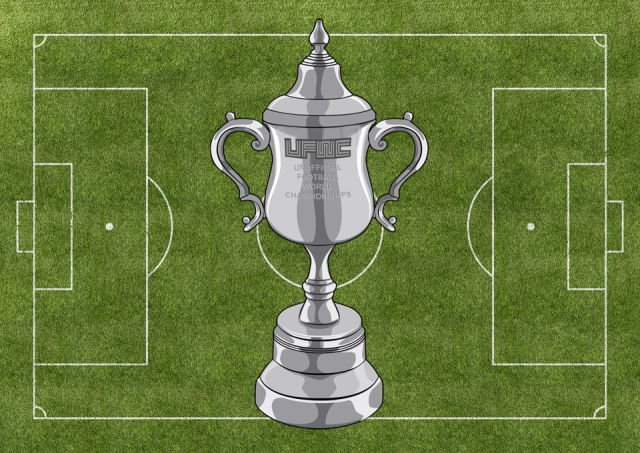
The UFWC as an organisation has been around since about 2002. That’s when this website was set up, and we’ve since been featured by a whole host of media organisations around the world, including the BBC, Sky Sports, The Guardian, The Telegraph, FourFourTwo and When Saturday Comes here in the UK where we’re based. We’ve got a trophy – the CW Alcock Cup – although it’s currently a virtual trophy only. (We’re open for a sponsor to help us create and present a real version to the winning teams!) We even have a mascot – Hughie the UFWC dinosaur. As you can probably tell, we don’t take ourselves too seriously, and the main aim is to make football even more fun and enjoyable than it already is.
If you want to know more about the UFWC, the best place to look is the official UFWC book, Unofficial Football World Champions, which traces the lineage of the UFWC title and tells the story of unofficial champs past and present, involving legendary teams and footballing minnows, classic finals and forgotten friendlies, celebrated players and unsung heroes. There’s a brand new revised and updated version for World Cup year 2014. You can order the book direct from this site, or from your favourite book shop.
How can you keep up to date with the UFWC? Well, this website is your first port of call. You can follow us on Twitter (@UFWC_Football) or join our Facebook group. (You can also follow me personally on Twitter for UFWC updates and comments – I’m @paulbrownUK.) You can also join in the chat on our forum.
We hope you’ll enjoy exploring the Unofficial Football World Championships!
Get the Unofficial Football World Champions book
Follow @UFWC_Football on Twitter