North Korea: unofficial football world champions

UFWC News | 18 November 2011 |

Korea DPR Supporters by LaertesCTB (Flickr)

Korea DPR Supporters by LaertesCTB (Flickr)

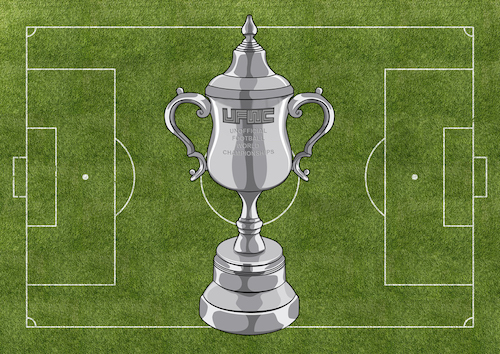
Yes, it’s true. North Korea are officially the Unofficial Football World Champions. Heads will shake and eyebrows will raise but, in beating former champions Japan 1-0 on Tuesday, North Korea won the UFWC title and took (virtual) possession of the CW Alcock Cup. It’s a shock that many football fans are still getting used to, with North Korea becoming one of the least likely champions the game has ever seen.

That, of course, is the beauty of the UFWC. Anything can happen over the course of 90 minutes, and North Korea deserved to take the title from Japan, who had taken the title from Argentina, who had taken the title from Spain… and so on. If you’re new to the UFWC (a very warm welcome) you might like to read our About section to get yourself up to speed on exactly what is going on here.

North Korea, some say Korea DPR, were ranked a lowly 124th in the world by FIFA (some 107 places below Japan), and have already been eliminated from the qualifying stages for the 2014 World Cup. And yet they stand before us today as the very best team in the world. And that’s (un)official.

There have been some unlikely UFWC champions over the course of the tournament’s 139-year history (Angola, Israel, Venezuela…) but none from such a lowly international football standing as North Korea. The only exception is a nation that no longer exists. The Netherlands Antilles pulled off the biggest shock result in UFWC history by defeating Mexico 2-1 in 1963 to become unofficial champions. But the Netherlands Antilles was dissolved as a nation last year. So North Korea can safely claim to be the most unlikely nation still in existence to have held the UFWC title.

But what do we know about the new champions? First let’s clear up any confusion regarding the name. We’re using North Korea, the most commonly-used Western name for the country. Its full name is the Democratic People’s Republic of Korea, and the country is usually referred to as Korea DPR by FIFA. If you want to be pedantic, the country’s official name is Choson-minjujuui-inmin-konghwaguk, but we’ll stick with North Korea if that’s alright with everyone.

North Korea’s first UFWC title match took place at the 1966 World Cup – the nation’s most fondly-remembered football tournament, at which they famously beat Italy 1-0. However, the UFWC match, against the Soviet Union in Middlesbrough, ended in a 3-0 defeat.

More recently, North Korea qualified for the 2010 World Cup in South Africa, only to lose all three group matches (none of which were UFWC title matches). The team did play reasonably well in a 2-1 defeat to Brazil, but were less impressive in a 7-0 defeat to Portugal. At the 2011 Asian Cup in January, North Korea drew 0-0 with the United Arab Emirates, and lost 1-0 to both Iran and Iraq.

The team’s next two UFWC title matches came against Japan, and were both qualifying matches for the 2014 World Cup. North Korea lost the first match – narrowly, to a single 94th-minute Maya Yoshida goal. The return fixture of course reversed that scoreline, with North Korea winning 1-0 courtesy of Pak Nam-Chol’s 49th minute goal.

The majority of North Korea’s national squad members play in the country’s domestic league, a competition that appears to be as confusing and insular as the country itself. The Korea DPR League contains ten teams, and is contested over three rounds, with the clubs divided into three classes. The 2010 “Highest Class Football League” was won by the Korean People’s Army team April 25 (also known as 4.25 Sports Team). UFWC goalscoring midfielder Pak Nam-Chol plays for April 25, as does the North Korean captain Ri Kwang-Chon. (Incidentally, there are two Pak Nam-Chols in the North Korean national squad, and both played in the UFWC victory over Japan. The other is a defender who plays for Amrokgang.)

The unorthodox nature of the domestic competition, coupled with the Korea Football Association’s reluctance to comply with FIFA’s transfer policies, means that North Korean club teams are ineligible to play in continental club competitions, such as the AFC President’s Cup, and therefore rarely face opposition from outside the country. A handful of North Korean internationals do play for foreign clubs.

Midfielders Ryang Yong-Gi and An Yong-Hak play for J. League Division 1 sides Vegalta Sendai and Kashiwa Reysol respectively, while defender Kim Song-Gi plays for Cerezo Osaka. Interestingly, all three Japan-based players were left on the substitute’s bench for the match against the Blue Samurai. Defender Cha Jong-Hyok, who plays in Switzerland for FC Wil, also sat on the bench, but 18-year-old striker Pak Kwang-Ryong, who plays for FC Basel, made the starting eleven.

Perhaps the most interesting member of the North Korean squad is striker Jong Tae-se, nicknamed “the People’s Rooney”, and known as Chong Tese in Japan and his current home of Germany. Jong was born in Japan to South Korean parents, and studied – and played football – at a Toyko’s Korea University, an institution funded by Chongryon, a group that represents North Koreans in Japan. He subsequently decided to apply for North Korean citizenship, and was awarded a North Korean passport. However, as South Korea does not officially recognise North Korea as a country, Jong was unable to complete the citizenship process, and curiously remains a South Korean citizen with a North Korean passport.

Jong, or Chong Tese, played for four seasons in Japan at Kawasaki Frontale, where he scored 47 goals in 115 appearances. He scored four goals on his international debut, appeared at the 2010 World Cup, and subsequently won a move to VfL Bochum in Germany. Jong scored 10 in 25 in Bundesliga second division last season, and has scored 3 in 9 so far this season. Internationally, he’s scored 15 goals in 28 appearances for North Korea. Jong was withdrawn towards the end of the first half of the Japan match, apparently suffering from an injury.

So where will North Korea take the UFWC? Back to Tajikistan for starters. North Korea’s next fixtured match is their final “dead rubber” World Cup qualifier in Dushanbe on 29 February 2012. Tajikistan were crushed 8-0 and 4-0 by Japan in their final two wins as champions, and it seems unlikely that the Tajikistanis will provide particularly strong opposition (although they are only ranked six places behind North Korea by FIFA).

There is always the possibility that North Korea will arrange a friendly match ahead of the Tajikistan game. Contrary to some comments posted here on the site, the country does play friendlies (five so far in 2011). So the next UFWC match may come around quicker than expected.

Looking further ahead, North Korea will play at the AFC Challenge Cup tournament following on from the Tajikistan match, in March 2012. Indeed, North Korea are the reigning champions in this competition for “emerging nations”, so the UFWC title is not the only one they hold. The tournament takes place in Nepal, and also features Palestine, the Philippines, India, Turkmenistan, the Maldives, and of course our old friends Tajikistan.

Undoubtedly there are some interesting times ahead. Whatever the path of the UFWC over the coming months, it looks set to shine a spotlight on several nations that rarely capture the attention of the wider footballing world. As enjoyable as Japan’s long run as champions was, North Korea’s reign looks like being every bit as much fun. You can follow every step of the UFWC’s North Korean adventure right here.

You can read more about the UFWC, its legendary teams and footballing minnows, classic finals and forgotten friendlies, celebrated players and unsung heroes, in the book Unofficial Football World Champions, now available from all good bookshops. The English edition is published by Superelastic and is available in paperback and on Kindle from Amazon.co.uk and other Amazon stores around the world. There is also a Japanese language edition, published by Asuka Shinsha and available from Amazon.co.jp.

While we’re plugging stuff, with Christmas shopping becoming increasingly unavoidable, you can show your friends that you’re in the know about the UFWC with T-shirts from the UFWC T-Shirt Store. And don’t forget that if you’d like to place a bet on upcoming UFWC matches, or football matches of any description, you can find online betting tips and claim a free bet from our friends at Betfair.com.

You can keep up with all things UFWC by following us on Twitter or joining us on Facebook. (You can also follow me on Twitter, @paulbrownUK.)

Get the UFWC book

Farewell Japan: 16 games as unofficial football world champions

UFWC News | 16 November 2011 |

Mascot JapanTuesday’s title match defeat for the Blue Samurai saw Japan lose the UFWC title, and saw North Korea crowned the new Unofficial Football World Champions. We’ll be dedicating plenty of time to the new champions over the next few days, but first we’re taking a look back over Japan’s exciting and memorable reign as champions.

New to the UFWC? Read our Beginner’s Guide.

Few sets of supporters have embraced the UFWC as wholeheartedly as the Japanese. 2011 was an incredibly difficult year for Japan, and will of course be remembered in history for the devastating earthquake and tsunami that struck the nation in March. Several national team matches were cancelled and the league programme was suspended as a result. Japan were forced to pull out of the Copa America, which could have pushed their UFWC reign in an entirely different direction. However, Japan was quick to return to football, and this is how the past year or so eventually played out:

The Blue Samurai held the UFWC title for 16 matches, spanning more than 12 months, from October 2010 to November 2011. Of those 16 matches, Japan won 11 and drew 5, scoring 33 goals along the way. In terms of longevity, it doesn’t quite match the Netherlands’ recent record-breaking run of 21 matches as champions from November 2008 to July 2010, but it’s still a very impressive reign.

Japan took the UFWC title in October 2010 with a 1-0 win over previous champions Argentina – Messi, Tevez, Milito and all. At the Asian Cup in Qatar in January, Japan thrashed Saudi Arabia 5-0, beat the hosts in a 3-2 thriller courtesy of a last minute goal, and then played out an amazing semi-final match against South Korea. The score was 1-1 after 90 minutes, and 2-2 after extra time, before Japan won 3-0 on penalties.

Then came the Asian Cup final against Australia, another epic match, settled by an extra-time goal from Tadanari Lee. Japan were AFC champions as well as UFWC champions. Among the other highlights of the reign have been a 3-0 win over South Korea in August, and two huge wins over Tajikistan – 8-0 and 4-0 – in October and November of this year.

Japan scored 33 goals in their 16 games as UFWC champions. Shinji Okasaki scored Japan’s winner against Argentina, and the fourth goal in the most recent game against Tajikistan – the first and last goals of the reign. He scored two in that Tajikistan game, and two in the previous game against the same opponents, and also scored a hat-trick against Saudi Arabia in January. His total of 9 goals makes Okasaki Japan’s top goalscorer in the UFWC. Japan’s UFWC goalscorers are:

Okazaki (9); Kagawa (6); Maeda (4); Honda (2); Yoshida (2); Havenaar (2), Lee (2); Hasebe; Hosogai; Inoha; Konno; Komano, Nakamura.

The full list of Japan’s results during their reign as UFWC champions is as follows (click for match reports):

08/10/10 JAPAN 1-0 ARGENTINA Friendly, Saitama
12/10/10 SOUTH KOREA 0-0 JAPAN Friendly, Seoul
09/01/11 JAPAN 1-1 JORDAN Asian Cup, Doha
13/01/11 SYRIA 1-2 JAPAN Asian Cup, Doha
17/01/11 SAUDI ARABIA 0-5 JAPAN Asian Cup, Al Rayyan
21/01/11 JAPAN 3-2 QATAR Asian Cup, Doha
25/01/11 JAPAN 2-2 SOUTH KOREA (JAPAN WIN ON PENS) Asian Cup, Doha
29/01/11 JAPAN 1-0 AUSTRALIA Asian Cup Final, Doha
01/06/11 JAPAN 0-0 PERU Friendly, Niigata
07/06/11 JAPAN 0-0 CZECH REPUBLIC Friendly, Kanagawa
10/08/11 JAPAN 3-0 SOUTH KOREA Friendly, Sapporo
02/09/11 JAPAN 1-0 NORTH KOREA World Cup Qualifier, Saitama
06/09/11 UZBEKISTAN 1-1 JAPAN World Cup Qualifier, Tashkent
07/10/11 JAPAN 1-0 VIETNAM FR Kobe
11/10/11 JAPAN 8-0 TAJIKISTAN WCQ Osaka
11/11/11 TAJIKISTAN 0-4 JAPAN WCQ Dushanbe
15/11/11 NORTH KOREA 1-0 JAPAN WCQ Pyongyang

Japan’s 11 UFWC title match wins translate to 11 UFWC ranking points (no points are awarded for draws). This means that, having been completely unranked just over a year ago, Japan has now climbed into the top 20 UFWC rankings, standing in 17th position, level on points with Chile and Greece. Japan have also risen to 17th place in the FIFA rankings, having been ranked 30th before their UFWC run. The all-time UFWC top 20 currently reads:

1 SCOTLAND 86
2 ENGLAND 73
3 ARGENTINA 51
4 NETHERLANDS 49
5 RUSSIA 41
6 BRAZIL 29
7 GERMANY 27
7 ITALY 27
9 SWEDEN 26
10 FRANCE 25
11 HUNGARY 17
11 SPAIN 17
13 URUGUAY 16
14 CZECH REP 15
15 AUSTRIA 12
15 WALES 12
17 CHILE 11
17 GREECE 11
17 JAPAN 11
20 SWITZERLAND 10
Full rankings table

So Japan’s run as UFWC champions is over, for now. With the title still in Asia, there is always the chance that the Blue Samurai will get the opportunity to become unofficial champions once again in the near future. It’s to be hoped that Japanese fans have enjoyed their team’s run, and will continue to follow the UFWC.

As a reminder, the UFWC book is available in Japanese, and there are a range of UFWC Japan T-shirts in our Show your support for the UFWC, and Japan, with T-shirts from the UFWC T-Shirt Store.

So farewell and good luck to Japan. North Korea’s time has come, and we will take a closer look at the new unofficial football champions over the next few days.

Get the UFWC Japanese Language Book

UFWC T-Shirt Shop

Get your UFWC T-shirts, including Japan mascot and trophy, at our T-shirt shop

North Korea 1-0 Japan

Match Reports | 15 November 2011 |

Entrance to Kim Il Sung Stadium, photo by John Pavelka (Flickr)

Entrance to Kim Il Sung Stadium, Pyongyang, photo by John Pavelka (Flickr)

North Korea 1-0 Japan
15/11/2011, Pyongyang
Scorer: Pak Nam-Chol

Japan’s long reign as UFWC champions came to an end today in Pyongyang, as North Korea became the new unofficial football world champions. Midfielder Nam Chol Pak was the hero for the North Koreans, who fought hard for a deserved victory against an admittedly weakened Japan side. North Korea, ranked just 124th in the world by FIFA, become one of the most unlikely unofficial champions in UFWC history, proving that anything can happen over the course of 90 minutes.

This World Cup qualifier looked like something of a “dead rubber”, with Japan already through to the next qualifying stage, and North Korea already eliminated. However, the UFWC title was very much at stake, as was a good deal of pride, with relations between these two nations historically set to “frosty”. There were 50,000 people inside the Kim Il Sung Stadium, many of them army and public workers. Less than of them were Japanese fans. The stadium’s plastic pitch provided an unfamiliar surface for most of the Japanese players, too.

Japan coach Alberto Zaccheroni made a host of changes for the match. Kawashima, Uchida, Yoshida, Endo, Havenaar and Kagawa were all left out from the team that started against Tajikistan, and in came Nishikawa, Kurihara, Inoha, Hosogai, Kiyotake, and Maeda. Only Komano, Konno, Hasebe, Nakamura and Okazaki kept their places.

North Korea immediately attempted to take advantage of Japan’s weakened team, with a quick shot deflected just wide for a corner. Japan-born North Korean superstar Jong Tae-se, known as “the People’s Rooney” (and known as Chong Tese in Germany, where he plays for VfL Bochum), was involved in much of the Korean play, and he forced Shusaku Nishikawa into a save on six minutes, his shot pushed wide of the post.

North Korea’s early dominance clearly shook Zaccheroni, who called captain Makoto Hasebe over for some frantic instructions midway through the first half. And, although North Korea continued to dominate, the team suffered a huge blow with the withdrawal of an apparently injured Jong Tae-se. He was replaced by Pak Song-Chol.

Japan at least ended the first half on a positive note, with a good shot from Hasebe, but the match was goalless at the break.

The second half began with Japan winning their first corner of the game, but it came to nothing as Ryoichi Maeda flashed a header wide. Then came the game’s defining moment.

A long ball was floated into the Japanese box, headed on by Kwang-Ryong Pak, then headed goalwards by Pak Nam-Chol. Nishikawa, who should probably have done better, was completely eluded by the bounce of the ball, which ended up in the back of the net. 49 minutes played and North Korea led 1-0.

It was a tough game, with some hard challenges flying in, and one such tackle by goalscorer Pak Nam-Chol on Ryoichi Maeda saw the two players square up to each other. Both were shown the yellow card.

Shinji Okazaki went close for Japan with a long range shot that was tipped over the crossbar by Korean keeper Myong-Guk Ri, but overall North Korea continued to have the better of the game. Zaccheroni responded by bringing on Mike Havenaar, and Japan immediately began to go long to the big striker.

Japanese spirits must have been raised when North Korea were reduced to ten men, with Jong Il-Gwan sent off for a foul on another substitute, Astuto Uchida. Tadanari Lee was also introduced as Japan desperately tried to make their numerical advantage count and grab an equaliser. A Uchida shot and Havenaar header failed to trouble the keeper, but Japan were increasing their share of the possession. Then a nice move saw Japan finally put the ball in the back of the net – only for Havenaar to be correctly flagged offside.

The announcement of five minutes of stoppage time gave Japan hope, but most of those five minutes were taken up by injuries to two North Korean players. The clock ticked down, and the final whistle blew. 1-0 to North Korea. Japan had lost the UFWC title, and North Korea were the new unofficial football world champions.

So, as unlikely as it may seem, North Korea are the new unofficial football world champions. North Korea’s next scheduled match is against Tajikistan on 29 February 2012, and the recent UFWC performances of Tajikistan would suggest that the North Koreans will be well-placed to extend their reign.

We’ll be taking a closer look at the new UFWC champions here over the next few days, reflecting on the impressive reign of former champions Japan, and looking ahead to the future of the Unofficial Football World Championships.

Get the UFWC book