Archive

Posts Tagged ‘colombia’

Japan confirms Copa America participation turnaround

UFWC News | 15 April 2011 |

Mascot JapanJapan WILL participate in the Copa America, the Japan Football Association (JFA) announced yesterday. The JFA informed South American football confederation Conmebol by letter that it will send a team to Argentina in July. This means that Japan’s UFWC title match against Colombia is back on.

‘The JFA decided to participate in the Copa America today,’ general secretary Kozo Tashima said. ‘We are in the process of notifying Conmebol as we speak.’

The JFA had declared its intention to withdraw from the tournament following the devastating earthquake and tsunami that hit Japan on 11 March. In addition to the burden of dealing with the after-effects of the disaster, there was a conflict with re-arranged J-League fixtures, suspended at the time, and now to be played in July.

Although JFA President Junji Ogura had agreed with Conmebol that his country should not participate, and Spain was invited to take its place, the Copa America organising committee subsequently asked Japan to reconsider. The feeling seems to be that the JFA believe participation can boost morale at home, and show the rest of the world that Japan is recovering. The JFA has clearly been moved by messages of support. Julio Grondona, the president of the Argentinean FA, has said, ‘I want to hold the Copa America for the people of Japan.’

However, doubts remains over which Japanese players will take part in the tournament. The JFA has confirmed that J-League 1 clubs will not have to release their players. Therefore Alberto Zaccheroni will be without the likes of Gamba Osaka midfielder Yasuhito Endo. However, J-League 2 clubs will have to release their players, so it’s likely defender Yasuyuki Konno will travel to Argentina, to the consternation of his club FC Tokyo.

A potentially bigger problem involves Japan’s many overseas-based players, 28 of whom play for European clubs. These clubs will expect their players to be in pre-season training in July, and would not normally be obliged to release them for the Copa America. However, FIFA has stated that it will consider changing its rules to force the clubs to release Japanese players for the tournament.

In the event that Japan is not able to secure the release of its best players and cannot field its strongest team, there has to be a question mark over whether its Copa America fixtures can be classed as FIFA ‘A’ matches. Only FIFA ‘A’ matches, in which ‘both Associations field their first national representative team’, count as UFWC title matches. So there could well be more twists and turns yet to come in this saga.

However, as it stands, we’re looking forward to the UFWC recommencing with Japan vs Colombia at Estadio 23 de Agosto, San Salvador de Jujuy, Argentina, on 2 July.

UFWC T-Shirt Shop

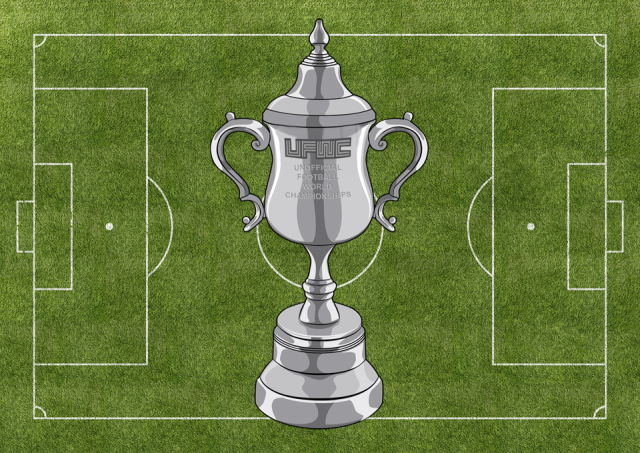
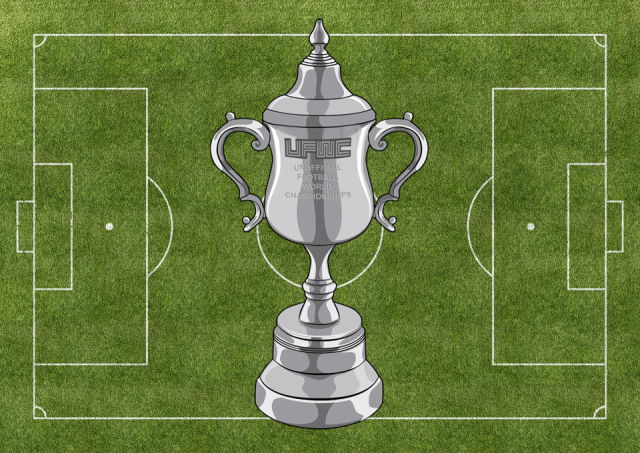
Get your UFWC T-shirts, including Japan mascot and trophy, at our T-shirt shop

UFWC News ,

Japan confirm Copa America withdrawal

UFWC News | 5 April 2011 |

The JFA has confirmed that Unofficial Football World Champions Japan will not participate in the Copa America this summer. As a result, the arranged Japan vs Colombia UFWC title match will not take place.

Japan had been due to participate in the South American continental tournament as guests. JFA President Junji Ogura travelled to Paraguay to discuss the decision at the headquarters of governing body Conmebol.

‘We had asked to be invited to the South American championship, first of all. Therefore, it is not for us to make a decision unilaterally,’ Ogura explained. However, after discussing the current situation in Japan, where suspended domestic J-League fixtures are due to be played in July, both parties agreed that Japan should not participate.

‘The priority at this moment is to continue saving lives and rebuilding the country after the earthquake and tsunami,’ said Ogura. ‘Now we have to use this period to finish our domestic championship, as the Asian qualifiers for the 2014 World Cup and the 2012 London Olympics are approaching.’

This entirely understandable decision temporarily leaves Japan’s international fixture list blank. The next competitive fixture is likely to be a World Cup 2014 qualifier – Japan will go into the main group draw in Brazil on 31 July 2011. However, there are likely to be friendly matches arranged ahead of that. (The 2012 Olympic football tournament is contested by under-23 teams, so those games are not FIFA ‘A’ matches and don’t count as UFWC title matches.)

With no title matches fixtured, the UFWC will be on temporary hiatus for the next few months. However, ufwc.co.uk will continue to bring you news and features from the Unofficial World Championships, beginning with a look at the longest gaps between title matches – and some have been huge.

We’ll also update you as soon as the next UFWC title match is announced. In the meantime, of course, Japan remain Unofficial Football World Champions.

UFWC News ,

When is a UFWC title match not a UFWC title match?

Features | 26 July 2010 |

When is a FIFA ‘A’ match not a FIFA ‘A’ match? That is the question. Unfortunately it’s not always a question that’s easy to answer, and that can cause a bit of a headache for us here at the UFWC.

In most cases, UFWC title matches are FIFA ‘A’ accredited matches. According to FIFA, international ‘A’ matches are those that are arranged between two FIFA-affiliated national football associations in which both associations field their first national representative team. That seems clear enough, and, usually, the UFWC counts matches listed on the FIFA.com list of fixtures and results.

However, inconsistencies in historical classification mean it’s not always possible to rely on FIFA’s records. By FIFA’s own admission, its records have been sourced from various third parties, and it cannot vouch for their complete accuracy.

This raises several questions, not least of which is, what has happened to FIFA’s yearbooks recording the ‘A’ matches that each national association was required to register? But the main question facing us at the UFWC is, what do we do when a match’s categorisation is disputed?

For example, take the case of two Scotland matches from 1929: Norway 3-7 Scotland on 26 May 1929; and Netherlands 0-2 Scotland on 4 June 1929. The Scottish FA regards both of these games as ‘A’ matches, and lists them as so on its website. However, their Norwegian and Dutch counterparts don’t agree.

The Norwegian FA consider their game against Scotland in 1929 to have been a ‘test match’. Similarly, the Dutch don’t consider their match to have been official because they were still fielding amateur players at that time, while the Scots were professionals. FIFA has retrospectively removed both games from its records, and from its website.

However, crucially, as the games were regarded as full internationals at the time, they remain in the UFWC record books as full title matches. The fact that one or other of the teams may have been amateurs does not necessarily mean that those teams were not the first representative teams of those nations. Many early UFWC matches involved amateur teams – indeed in the early years of football all teams were amateurs – and almost all of these matches remain in the FIFA record books.

So we can accept that there will be some inconsistency regarding results delving back into football’s formative years, but what happens when disputes occur over more recent matches? Take, for example, two matches from the 1995 Carlsberg Cup Chinese New Year Tournament, played in Hong Kong: Colombia 0-1 South Korea on 31 January 1995; and South Korea 0-1 Yugoslavia on 4 February 1995.

Although at the time these two games were regarded as full internationals, they have subsequently been removed from FIFA’s records because South Korea apparently fielded an under-21 side. However, 10 of the 11 South Korean players fielded by against Colombia played in their country’s next match, against China on 19 February 1995. And that match still stands in the FIFA records. So the under-21 argument doesn’t wash. For UFWC purposes, both of these results stand.

Another major headache for UFWC statisticians is when title-holders play two simultaneous matches in different countries. This curious situation first occurred on 5 March 1892, when UFWC champs England played both Wales and Ireland in separate matches on the same day, with two completely different line-ups. So, England despatched 11 (mostly amateur) players to Wales, and another 11 to Ireland. Both won 2-0, retaining the UFWC title for England, and thankfully alleviating the potential scenario of two different nations having a claim to the title. Both matches stand as A matches, so both stay in the UFWC records.

This situation happened again on 30 September 1945 and on 15 September 1946, both times involving UFWC title holders Sweden. The Swedes played Finland and Denmark, and Finland and Norway respectively. Sweden won all four games, again avoiding potential problems in determining which nation ended up as champions. Again, the matches remain in the UFWC record books.

So we’re not going to retrospectively remove games from the UFWC records due to reclassification. But what about cases where errors are found in the records? Take the case of this match: Wales 2-2 England on 29 March 1904. Only, the match didn’t take place on 29 March 1904. It took place on 29 February, as spotted by UFWC statistical guru Peter Waring. Oops.

On 29 February 1904 Ireland were UFWC champions, so the Wales vs England match was not a title match. The error means this game has been removed from the UFWC record books. As it was a draw, and there was no change of title holder or ranking point award, there is no effect on the UFWC lineage or rankings table.

Will there be further reclassifications and disputes? Probably. (And if you spot any errors in the UFWC records do let us know.) But rather than look back, we prefer to look forward. Thankfully we can be pretty confident about which forthcoming matches will be FIFA ‘A’ matches, and therefore which will be UFWC title matches.

Take, for example, a little match taking place on 11 August between Mexico and Spain. Definitely an ‘A’ match. Definitely a title match. Definitely one to look forward to. what do you reckon?

Features , , , , , , ,