Archive

Posts Tagged ‘Scotland’

The Alcock Internationals – Unofficial Victorian Football

Features | 21 May 2013 |

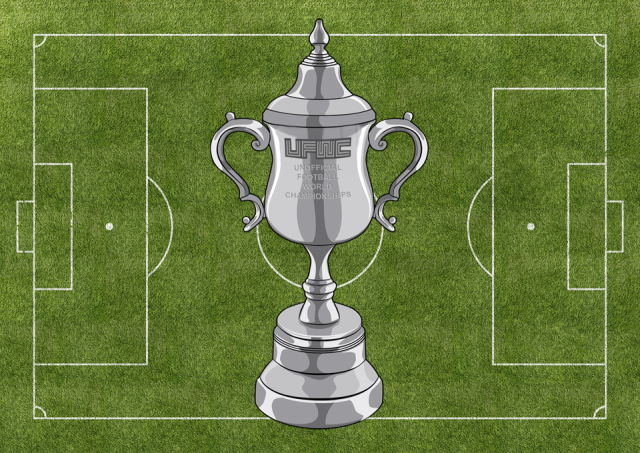
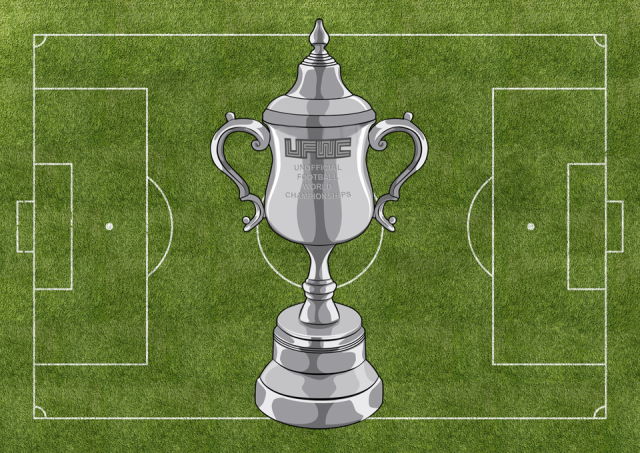
The UFWC tracks an alternative route through football history beginning with the first official international match, played between Scotland and England on 30 November 1872. However, there were also a series of unofficial international matches played between 1870 and 1872. In this exclusive extract from new book The Victorian Football Miscellany we look at those unofficial Victorian football matches:

***

The Victorian Football MiscellanyIn January 1870, a notice appeared in the Field magazine inviting players to participate in an association football match ‘between the leading representatives of the Scotch and English sections’. The match was billed as a ‘great International Football Match’, although it has not come to be regarded as such. It was the first of five so-called ‘Alcock Internationals’ – a series of England versus Scotland games organised by FA secretary CW Alcock. The matches aren’t considered official international matches, but they were important stepping stones towards establishing proper England versus Scotland fixtures.

For the first Alcock match, only one member of the Scottish team, Kenneth Muir Mackenzie, was actually born in Scotland, and all of those selected were London-based. So the ‘London Scottish’ side was not regarded as being truly representative of Scotland. In fact, all of the ‘London Scottish’ players had roots that would have qualified them to play for Scotland under modern rules. Nevertheless, Alcock regarded the team as ‘counterfeit’, and made efforts to improve matters for subsequent matches.

He wrote to the Glasgow Herald, appealing for Scottish players to represent their country. ‘In Scotland, once essentially the land of football, there should still be a spark left of the old fire,’ he wrote. The appeal had limited success, however, attracting only one Scottish player, Robert Smith of Queen’s Park, who in any case lived in London.

Defeat for the Scots in the second match brought derision from north of the border. ‘It must not be supposed that the 11 who represented us in their defeat involved our national reputation as athletes,’ wrote a correspondent to the Scotsman. Alcock responded, pointing out that he had invited Scottish players to participate. ‘The fault lies on the heads of the players of the north,’ he wrote, ‘not on the management who sought the services of all alike impartially.’ However, despite further appeals, no Scotland-based players came forward for the subsequent games, and it would be 1872 before an ‘official’ international match was played.

1872overhead

The Alcock Internationals:

1. England 1-1 Scotland, 5 March 1870
Scotland, captained by James Kirkpatrick, took the lead against CW Alcock’s England team courtesy of a ‘lucky long kick’ from Robert Crawford, ‘in the reprehensible absence of England’s goalkeeper’. A crowd of around 500 watched the match at the Kennington Oval, and the goal was met with ‘vociferous applause from the canny Scots, who represented no small portion of the spectators’. However, those canny Scots were to be disappointed as England grabbed a last-minute equaliser courtesy of Alfred Baker, following ‘one of the finest runs that has ever been witnessed’.

2. England 1-0 Scotland, 19 November 1870
This victory for England (‘who appeared more uniformly skilful than their antagonists’) was secured by a single goal, created by Alcock and scored by Robert Walker. The efforts of Queen’s Park’s Robert Smith, who ‘proved most useful from first to last’, were not enough to save Scotland from defeat.

3. England 1-1 Scotland, 25 February 1871
Scotland, now captained by Arthur Kinnaird, took the lead through Charles Nepean (a distant uncle of the actor Hugh Grant). However, as in the first match, England scored a late equaliser, with Robert Walker getting his second goal in two games.

4. England 2-1 Scotland, 18 November 1871
Clapham Rovers captain Walker scored another two goals in this England victory, securing a reputation as the star player of the Alcock Internationals. Royal Engineers’ Henry Renny-Tailyour scored a consolation goal for Scotland.

5. England 1-0 Scotland, 24 February 1872
Sheffield FC’s Charles Clegg became the first non-London player to participate in these games, and he scored England’s winning goal ‘to the immense delight of the English supporters’. However, the match, played in inclement weather, was a disappointment and the ‘unofficial’ internationals ended.

***

The Victorian Football Miscellany by Paul Brown is a quirky and fascinating collection of trivia, facts and anecdotes from football’s earliest years. Delve into an absorbing world of ox-bladder balls, baggy-kneed knickerbockers and outstanding moustaches, and read remarkable tales of the first ever cup final, the invention of the shinpad, the evolution of dribbling, the first own goal and a seemingly-invincible penalty-taking elephant. Other entries cover the foundation of the Football Association, the development of the Laws of the Game and the origins of football’s most popular clubs. Packed with biographies, profiles and lists, this is an indispensable guide to the colourful and unusual world of 19th century football. You can find more details, extracts and ordering information at the Victorian Football website.

Features ,

Goal-Post: the first ever UFWC title match

UFWC News | 25 September 2012 |
Comments Off

Goal-PostA new book, Goal-Post: Victorian Football, contains a fascinating selection of first-hand accounts from the earliest days of football, and includes a report of the first ever UFWC title match. That match – the first ever international football match – was played between Scotland and England on 30 November 1872. Below is an edited extract from the match report that originally appeared in Bell’s Life in the following week. Goal-Post: Victorian Football is available in paperback and as an eBook from Amazon and from the Goal-Post website.

This important match was played on the West of Scotland Cricket Ground, on Saturday, and resulted in a drawn game, after a splendid display of football in the really scientific sense of the word, and a most determined effort on the part of the representatives of the two nationalities to overcome each other. The only thing which saved the Scotch from defeat, considering the powerful forward play of England, was the magnificent defensive play and tactics shown by their backs, which was also taken advantage of by the forwards.

When the players came to the scratch it was at once seen that the English had greatly the advantage in weight and appearance (averaging about 12st against 10st of their opponents), and the odds were freely offered in favour of “John Bull”, who had a really typical representation in the team. The Scotch players, on the other hand, although slightly built, were exceedingly wiry and tough, and, belonging (at least the bulk of them) to one club, were at home in each other’s society, and knew what was required of them.

It was naturally thought that the English players, although showing fine individual play, would be deficient in working together, belonging as they did to so many different clubs, but the game had not proceeded far when this allusion was dispelled like mist at the approach of the sun, for the magnificent dribbling of the English captain [Cuthbert Ottaway], [Arnold] Kirke-Smith, and [John] Brockbank was greatly admired by the immense concourse of spectators, who kept the utmost order, and although now and again showing some partiality to their own champions, a fine piece of play on the English side did not pass uncheered.

The Scotch had choice of the ground, and elected the pavilion end, from which they had the benefit of a slight decline, which terminated at the English goal. The game had not long commenced, when the English forwards, led by the stalwart form of their captain, began to show themselves conspicuous, the former making a splendid run till within a short distance of the Scotch goal, where one or two long shies were made without effect.

After this a most determined rush was made for the English goal, and the united exertions of [Robert] Smith, [Jerry] Weir, and [David] Wotherspoon, were nearly crowned with success, for [Robert] Leckie, who got the ball well in line, made an effort to kick goal, and had the ball only gone an inch under instead of landing on the tape, Scotland would have been the victor. This was the signal for a loud burst of enthusiasm on the part of the spectators, who thought a goal had been secured by one of their champions.

After the appeal had been settled half time was called, and the English having the advantage possessed by their opponents during the first half of the game soon drove the Scotch before them and put them on the defensive. All the tactics possessed by the English team were here put into account, the ball ever and anon going backwards and forwards in front of the Scotch goal, until one of the backs made a strenuous effort to get the ball home, but the goal-keeper saved the stronghold against all attempts.

With only five minutes to play, a most determined effort on behalf of the Scotch to free their goal from danger was successful, and Ker, who played throughout in a masterly style, made a fine run up to the English line just a time was called, the match thus ending in a draw.

When such brilliant play was shown by both sides it would almost be superfluous to “individualise”, but it must be admitted that the dribbling of the English forwards, especially Ottaway and Kirke-Smith, was greatly admired by all, and the splendid all-round play of Ker and Weir for Scotland deserve more than a passing notice. Shortly after the match, and before the players left the field, three cheers were given for the English champions, and also the Scotch. The English team were entertained to dinner in the Royal Hotel, where toasts suitable to the occasion were proposed and responded to.

The above is an edited extract from Goal-Post: Victorian Football.

Goal-Post: Victorian Football book website
Get Goal-Post paperback from Amazon
Get Goal-Post eBook from Amazon

UFWC News ,