Archive

Posts Tagged ‘Scotland’

Unofficial Football World Champions book extract

UFWC News | 24 November 2010 |

UFWC fans can’t have failed to notice that the new Unofficial Football World Champions book is available to order right now. This extract gives a taster of what you can expect from the book, which tells the story of the unofficial championships via more than 100 UFWC title matches from 1872 right up to date. This is how it all began:

Unofficial Football World Champions book coverMATCH 1 – NO WINNER

Scotland 0-0 England
30 November 1872

Friendly
West of Scotland Cricket Ground, Glasgow
No Scorers

The Unofficial Football World Championships, and the glory that is international football, kicked off in 1872 with this very historic goalless draw – an undeniable anticlimax. Up until this point England had been the only international football side in the world, which made arranging international fixtures slightly problematic. The English busied themselves by playing games against a ‘London Scottish’ side, but appetite for a real England versus Scotland clash was whetted by Queen’s Park FC’s appearance in the FA Cup semi-finals in 1871. The cash-strapped Scottish club drew 0-0 with England’s Wanderers in the semi, but couldn’t afford to return for a replay. Wanderers were given a bye, and won the FA Cup. But Queen’s Park’s gumption so impressed the English FA that plans were made to send an England team north of the border to play an official Scotland side. The Scottish 11, selected by the (perhaps slightly impartial) Queen’s Park captain and goalkeeper Robert Gardner, consisted entirely of Queen’s Park players. England captain and selector (and secretary of the English FA) CW Alcock chose an 11 containing players from nine different clubs. Unluckily, Alcock was injured in a league match in the run-up to the game and was forced to replace himself as skipper with Oxford University forward Cuthbert Ottaway. For the fashion conscious: Scotland wore dark blue shirts with lion crests, white knickerbockers, and red head cowls, while England wore white shirts bearing the three lions crest, white knickerbockers, and blue caps. England, playing with an adventurous 1-2-7 formation, produced an impressive display of attacking football. But Scotland, playing 2-2-6, defended resolutely. The Bell’s Life in London journal described the game as, ‘a splendid display of football in the really scientific sense of the word, and a most determined effort on the part of the representatives of the two nationalities to overcome each other.’ At the final whistle, despite the lack of goals, both sides were afforded ‘three hearty cheers’. Almost 4,000 spectators turned up for the game, with the gate receipts for the day totalling a whopping £109. But, despite the enthusiasm of those in attendance, the first ever UFWC title match failed to produce a winner. Captains Gardner and Ottaway both left emptyhanded. What a bally rotten show.

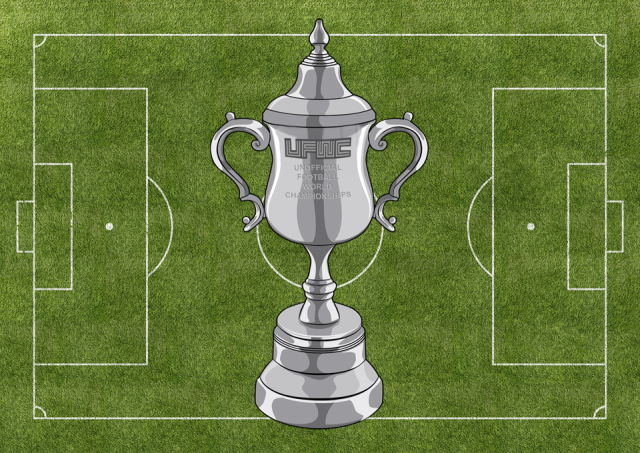
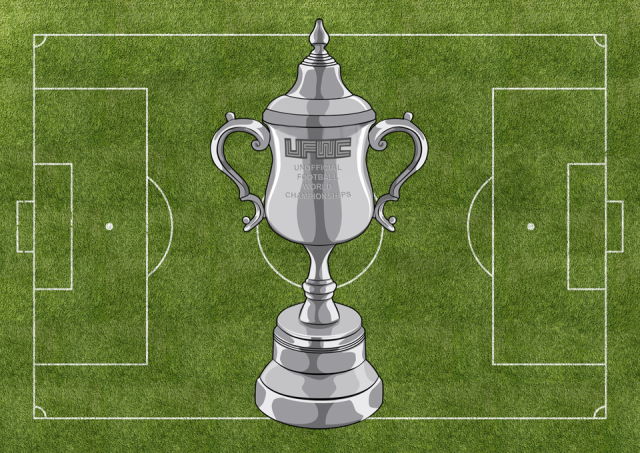
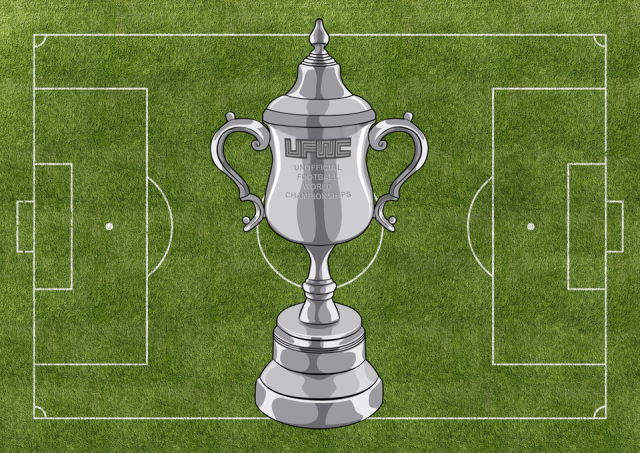
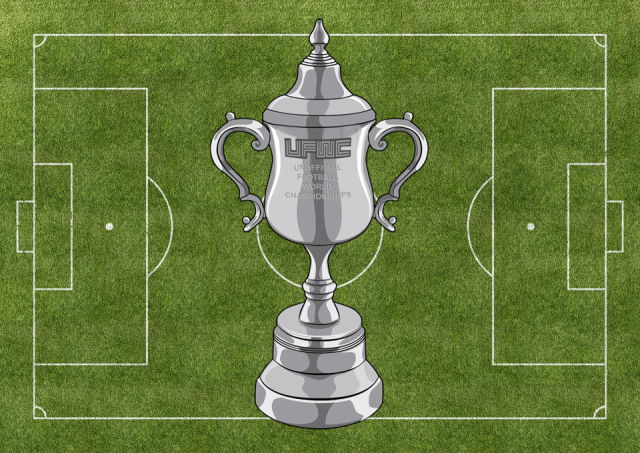
Charles William Alcock was a football pioneer, the instigator of international football, and – albeit inadvertently – the UFWC. It was CW who, in 1872, decided to send an English team to Glasgow to play a match against the Scots, ‘in order to further the interests of the Association in Scotland.’ He didn’t play in the game, although he did appear and score in a later UFWC match against Scotland in March 1875. Born in Sunderland in 1842, Alcock also created the first organised football competition, the FA Cup, with the first round of ties being played in November 1871. The first FA Cup final was won by Wanderers – captained, naturally, by one CW Alcock. The UFWC trophy is named in his honour as the CW Alcock Cup.

This is an extract from the book Unofficial Football World Champions by Paul Brown. Get more details here.

UFWC News ,

Looking ahead – Argentina and Scotland on Spain’s radar

UFWC News | 27 August 2010 |

The next UFWC title match, on 3 September, will see current champs Spain take on Liechtenstein. Anything can happen over 90 minutes, but, let’s be honest, it would be the biggest shock in the 138-year history of the UFWC if Liechtenstein managed to beat the undisputed official and unofficial champions. Not that we won’t be watching with anticipation – we do love the sniff of a potential upset here at the UFWC.

But, assuming that Spain do manage to successfully retain the title, what happens next? The good news is that things get even more exciting. Spain’s next match, four days later, is a friendly against Argentina – currently managerless following the departure of Diego Maradona. Argentina are ranked third in the all-time UFWC rankings – the highest-ranked non-British team in the competition – but haven’t held the title since 1998. Can they halt Spain’s reign?

If Spain manage to see off Argentina, they’ll face Lithuania on 8 October. And if they survive that encounter, their next game sees them face all-time UFWC champions Scotland on 12 October. So that would be the current WC and UFWC champions versus the all-time UFWC champions. Quite a prospect.

Spain’s next match is against Portugal – another tempting match. But we’re getting ahead of ourselves. What if lowly Liechtenstein manage to play the game of their lives and beat Spain? Well, they’d become the smallest nation ever to have held the UFWC title, and they’d make their first title defence against… Scotland.

So, whatever happens over the next couple of months, they look like being very exciting for UFWC watchers.

UFWC News , , ,